May 5, 2026
How Shift Coverage Tools Replaced Group Texts
See why phone trees, group chats, and Messenger break down during callouts, and what practical shift coverage systems hold up under pressure.
The callout usually lands at the worst possible time. A line cook texts 90 minutes before service. A server wakes up sick on Saturday brunch. A bartender drops out just as happy hour staffing is being finalized. At that moment, the coverage system in place gets tested for what it really is, either a workable process or a pile of habits held together by luck.
In many restaurants, shift coverage evolves the hard way. One method works for a while, then volume increases, turnover picks up, or the team gets tired of the chaos. Operators patch the gap, move to the next workaround, and repeat. The pattern is common across independent restaurants, bars, hotels, and multi-unit hospitality groups.
When the phone list was the shift coverage plan
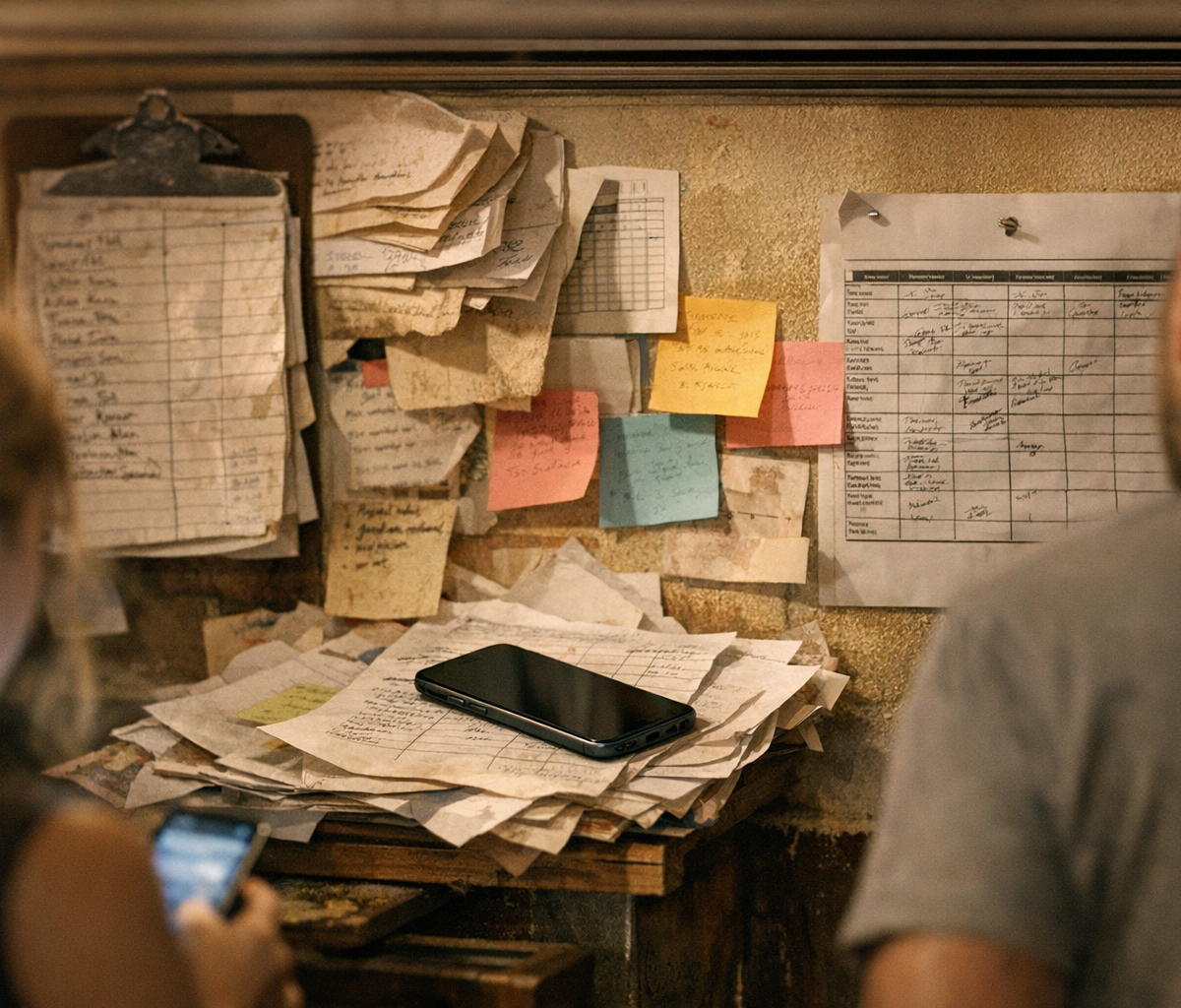
The first version is usually manual. A printed contact sheet by the office phone. Maybe a manager notebook with names, availability notes, and a rough sense of who might say yes. It feels organized until a real callout hits. Then the process turns into a race, one call, one voicemail, one unanswered text at a time.
Manual outreach creates two immediate problems. It is slow, and it depends too heavily on one manager knowing the team from memory. If that manager is off, new, or already buried in prep and vendor issues, coverage stalls. Even when the shift gets filled, the labor cost is hidden in management time, stress, and service disruption.
Why group texts stop working for callouts
The next step is usually a staff group text. It makes sense on paper. One message reaches everyone. Somebody responds. Problem solved. Until it does not.
Group texts break down because they are too broad and too messy. People who are not qualified reply anyway. Off-duty staff mute the thread because it never stops. Managers end up sorting through side conversations, duplicate responses, and the classic problem where three people say yes but nobody knows who actually got the shift. By the time that gets cleared up, the floor plan is already being redrawn.
This is where many operators realize that faster communication is not the same as better shift coverage. Speed matters, but so does structure.
Facebook Messenger and scheduling hacks
After group texts come the workarounds. Facebook Messenger groups. WhatsApp threads. Private social channels. Sometimes a scheduling platform with a swap board gets added, even if the coverage feature was clearly built as a side function. These tools can help for a while, especially with younger teams already active on messaging apps.
But under pressure, the same weaknesses show up. Messages get buried. Notifications are inconsistent. Staff members miss posts because they are in too many chats. Managers still have to manually decide who is eligible, who responded first, and whether the person taking the shift actually has the right role or certifications.
A no-show or same-day callout is rarely a communication problem alone. It is a filtering problem, a timing problem, and a decision problem. General-purpose messaging tools were not built around that reality.
What managers need from a callout system
By the time an operation has cycled through phone lists, text chains, and chat apps, the lesson is usually clear. The issue is not effort. Most teams are trying hard. The issue is that the process itself asks too much from already overloaded managers.
A usable callout system does a few things well. It reaches the right people immediately. It does not rely on one manager texting twenty employees individually. It allows more than one employee to accept, because availability is unpredictable. And it keeps the final decision with the manager, who still needs to balance skill, labor cost, and shift fit.
That is the gap purpose-built tools are designed to fill. Truvex, for example, focuses narrowly on the last-minute coverage problem. A manager sends one request, qualified off-duty workers get notified by push notification and SMS, multiple people can accept, and the manager chooses who covers. It is not trying to be every scheduling function under one roof. For many operators, that focus is the point.
Reducing labor cost without burning out managers
There is also a broader operational issue underneath all of this. Poor shift coverage systems do not just create stress. They drive overtime, force weak staffing decisions, and strain retention. The same reliable employee gets called again. The same manager stays late again. Over time, the team starts to feel that the operation is being held together by favors instead of process.
Restaurants and hospitality businesses already deal with enough volatility, weather, events, seasonality, and turnover all hit the schedule at once. Coverage should not be another daily fire drill caused by outdated tools.
The operations that handle callouts best are not necessarily the ones with the biggest management teams or the most expensive software. They are usually the ones that stopped relying on workarounds and built a process that matches the speed of the problem. In this part of the business, that shift matters more than most operators want to admit, right up until the next 7 a.m. sick text comes in.