April 30, 2026
What One Missing Server Really Costs
See how one server callout can drain $500 to $2,000 through slower turns, lower checks, comps, and bad reviews, and how operators limit the damage.
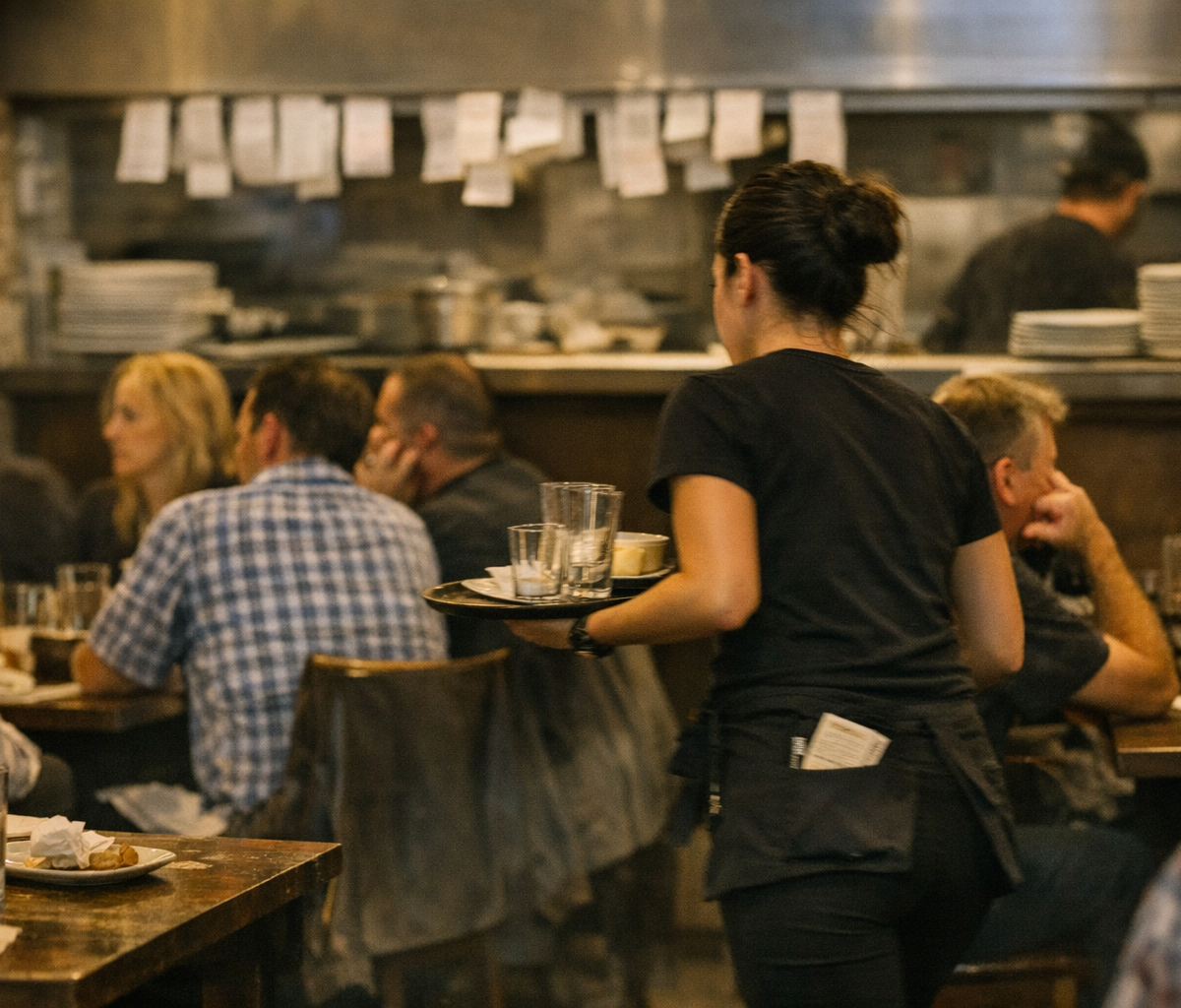
The damage starts before the first guest complains. One server calls out two hours before dinner, the floor gets resectioned, support staff gets stretched thin, and suddenly a normal Friday service is running uphill. Most operators feel that pain instinctively. Fewer put numbers to it. That is where the real problem hides.
Running short-staffed is not just a morale issue or an inconvenience on the schedule. It is a revenue problem, a service problem, and often a reputation problem that keeps costing money after the shift is over. In a full-service restaurant, one missing server during peak hours can realistically mean hundreds, and in some cases thousands, in lost revenue from slower table turns, lower check averages, comps, and review fallout.
How short-staffed service cuts revenue fast
A server is not just carrying plates. That position controls pace. When one section gets absorbed by the rest of the floor, every step slows down. Greeting times slip. Drink orders sit longer. Guests wait to ask for another round. Dessert never gets offered because the server is already in the weeds with three other tables.
That slowdown hits revenue in two ways. First, fewer covers get served. If a dining room usually turns a four-top twice during dinner but only manages one and a half turns because service is dragging, sales drop immediately. Across several tables, that adds up fast. Second, average check size often falls. Guests who might have ordered another cocktail, an appetizer, or coffee skip it when service feels delayed or disconnected.
In practical terms, losing even five to ten tables over a busy shift, or shaving a few dollars off the average check across the room, can put a full-service operation in the $500 to $2,000 loss range. The exact number depends on concept, volume, and price point, but the pattern is consistent. A thin floor bleeds revenue quietly and all at once.
Callout impact on ticket times and guest patience
Front-of-house understaffing rarely stays in the front. When servers are overloaded, orders arrive in uneven waves. The kitchen gets slammed in bursts instead of a steady flow. Ticket times become less predictable. Food may sit in the window longer because nobody is free to run it. By the time a plate lands, the guest has already been waiting too long.
That is where comps start creeping in. A free dessert here, a discounted entree there, maybe a manager visit with an apology and a voided appetizer. None of those decisions are unreasonable in the moment. They are often necessary. But they are still margin leaving the building because one shift lacked coverage.
Shift coverage problems do not end after close
The longer-term cost is harder to track, but it matters. Guests who experience slow service do not always complain on the floor. Many save it for Google, Yelp, or OpenTable. A review mentioning long waits, forgotten drinks, or rushed staff can shape booking decisions for weeks, especially in markets where diners compare options quickly.
There is also the internal cost. The team that showed up gets punished for someone else calling out. Strong servers end up taking oversized sections, support staff gets burned out, and managers spend the whole shift firefighting instead of leading. Repeated often enough, short-staffed service becomes a turnover issue. Then the labor problem gets even more expensive.
Scheduling for callouts, not just ideal labor cost
Most schedules are built around the assumption that everybody shows up. That is neat on paper and unreliable in real life. Restaurants that protect revenue usually plan for some level of disruption. That may mean cross-training support staff, keeping an on-call bench, or having a clear callout protocol that starts the moment coverage is needed.
Speed matters here. The first 15 minutes after a callout are usually the difference between a manageable adjustment and a bad service. Manual group texts and phone trees still exist, but they are slow and often depend on one manager chasing replies while handling prep, vendors, and pre-shift. Tools like Truvex address that specific gap by alerting qualified off-duty staff immediately through push notification and SMS, so coverage can be found before the floor gets reworked beyond repair.
No-show prevention is really margin protection
The lesson is simple, even if the fix is not. A missing server does not create one problem. It creates a chain reaction. Slower turns reduce covers. Delayed service shrinks checks. Kitchen flow gets messy. Comp costs rise. Reviews suffer. The team gets worn down.
Operators tend to notice understaffing when the room feels chaotic. By then, the money is already gone. The better approach is to treat shift coverage as part of revenue protection, not just scheduling administration. In this business, one open section can cost more than it looks like on the labor line.